
When it comes to crafting the perfect espresso, one crucial yet often overlooked element is the grinder you choose. While discussions often focus on espresso machines and puck preparation, the choice between geared and direct drive grinders can significantly impact both the quality of your espresso and the reliability of your setup. Despite their importance, this aspect of espresso preparation frequently doesn’t receive the attention it deserves.
In the context of espresso, where precision and consistency are key, the type of grinder you use can greatly affect the flavor and texture of your shots. The choice becomes even more critical in environments with high humidity, like Singapore, where the condition of coffee beans can be more variable. Geared grinders and direct drive grinders handle these challenges differently, and understanding how each operates can help you achieve the perfect grind for your espresso.
This article will delve into the differences between geared and direct drive grinders, focusing specifically on their impact on espresso grinding. Whether you’re a home barista or an espresso aficionado, this guide will help you make an informed decision that aligns with your espresso-making goals.
What is a Geared Grinder?
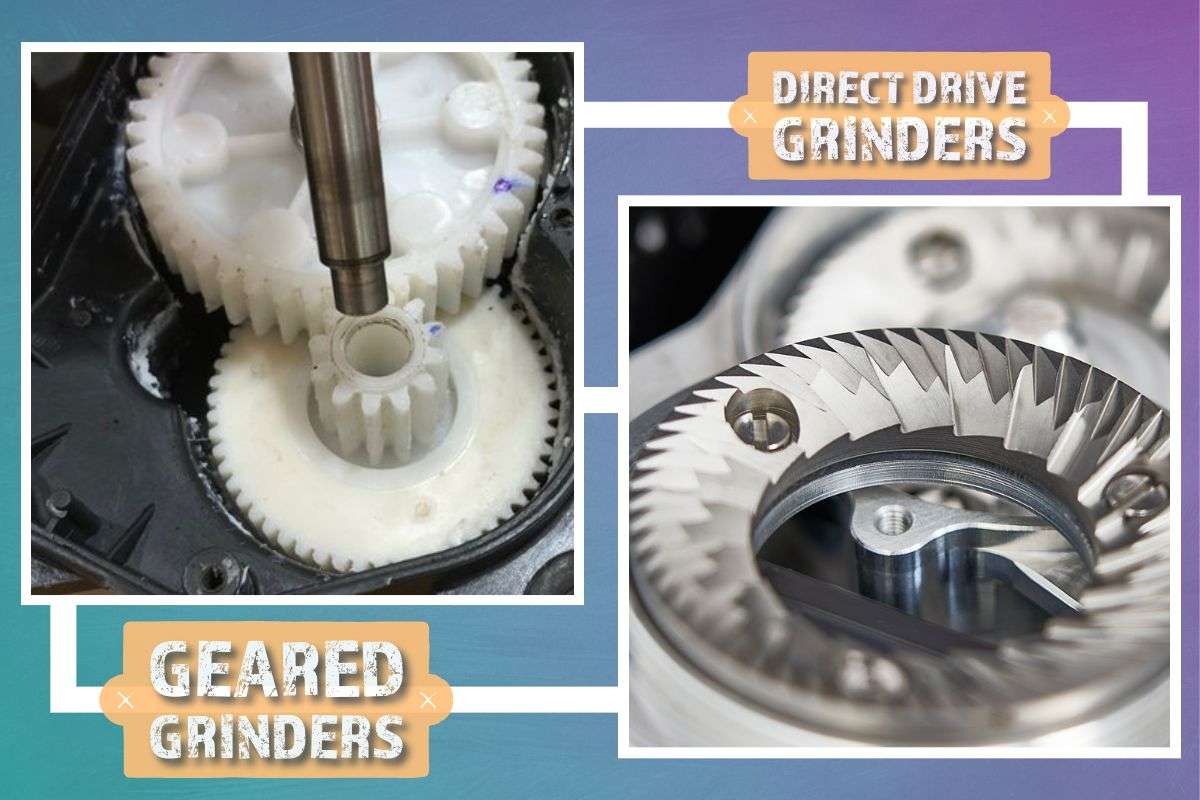
A geared grinder, as the name suggests, uses a system of gears to drive the burrs that grind the coffee beans. This design typically involves a smaller motor that connects to a set of gears, which in turn rotate the burrs at a specific speed. The gear mechanism allows the grinder to achieve higher torque, enabling it to handle a variety of grind sizes and bean types, despite the smaller motor.
Advantages of Geared Grinders for Espresso:
High Torque for Consistent Grinding: The primary advantage of a geared grinder is its ability to maintain consistent grinding performance, even under varying loads. This is particularly important for espresso, where uniform particle size is crucial for achieving the desired extraction. The high torque generated by the gears ensures that the burrs can grind evenly, producing a consistent espresso grind.
Versatility: Geared grinders often allow for a wider range of grind settings, making them versatile enough to handle different brewing methods. However, when specifically calibrated for espresso, they can deliver precise and consistent results that meet the high standards required for espresso shots.
Compact Design: The gear mechanism allows manufacturers to design grinders that are more compact, as the motor can be smaller while still delivering the necessary power. This is particularly beneficial for home baristas who need a powerful grinder but may have limited counter space.
What is a Direct Drive Grinder?
A direct drive grinder uses a direct connection between the motor and the burrs, eliminating the need for gears or belts to transfer power. In this design, the motor directly drives the burrs at a consistent speed, resulting in a more straightforward and robust grinding mechanism. This simplicity in design offers several advantages, particularly when it comes to grinding espresso.
Advantages of Direct Drive Grinders for Espresso:
Durability and Longevity: Direct drive grinders are known for their durability. With fewer moving parts and no reliance on gears, there’s less that can go wrong over time. This makes them particularly robust, especially when grinding harder or denser coffee beans, which are common in regions with high humidity like Singapore. The direct drive system can handle these tougher beans with ease, reducing the risk of damage.
Consistent Grinding Performance: The direct connection between the motor and burrs ensures that the grinder operates at a stable and consistent speed. This consistency is critical for producing the fine, uniform grind required for espresso. With direct drive grinders, there’s less fluctuation in grind size, leading to more consistent shot quality.
Quiet Operation: Direct drive grinders typically operate more quietly than geared grinders. The absence of gears reduces the mechanical noise, making for a quieter espresso-making process. This can be a significant advantage for home baristas who prefer a more serene environment.
Low Maintenance: With fewer components to maintain, direct drive grinders are generally easier to care for. There’s no need to worry about gears wearing out or belts needing replacement. As a result, these grinders often require less frequent servicing and are less prone to breakdowns, making them a reliable choice for those who prioritize ease of use.
Which Grinder Should You Choose?
When it comes to choosing between a geared grinder and a direct drive grinder, it’s important to consider your specific needs and environment.
For instance, many popular home grinders, like those from Breville, use a geared grinder mechanism. While these grinders are often efficient and effective for everyday use, they can be more susceptible to damage when grinding harder beans. This is particularly relevant in places like Singapore, where high humidity can affect the hardness and moisture content of coffee beans, potentially leading to more strain on the grinder’s gears.
On the other hand, grinders from brands like Eureka use direct drive systems. These grinders are generally more robust and less prone to damage, even when dealing with tougher beans. The direct drive design ensures consistent performance and durability, making them an excellent choice for users who regularly grind harder or high-moisture beans.
When deciding between a geared and direct drive grinder, consider the types of beans you typically use and the local climate conditions. If you’re in a humid environment like Singapore and often grind harder beans, a direct drive grinder from Eureka may offer better long-term reliability. However, if you’re looking for a more budget-friendly option and primarily use standard beans, a geared grinder from Breville might meet your needs.
Conclusion
Choosing between a geared grinder and a direct drive grinder ultimately comes down to your specific espresso-making needs and the conditions in which you typically brew. Both types of grinders have their merits, but they cater to different priorities and preferences.
Geared grinders, with their compact design and high torque, offer versatility and are often more affordable, making them a popular choice for home baristas. However, their reliance on gears can make them more susceptible to wear and tear, particularly when dealing with harder beans or high-humidity environments like Singapore.
Direct drive grinders, on the other hand, excel in durability, consistency, and low maintenance. Their straightforward design makes them particularly well-suited for espresso enthusiasts who prioritize a reliable, long-lasting grinder capable of handling even the toughest beans. While they may come at a higher cost and occupy more counter space, the benefits they offer in terms of consistent espresso grinding and longevity often make them a worthwhile investment.
In the end, the best grinder for you will depend on your espresso habits, the types of beans you use, and your willingness to invest in a machine that aligns with your coffee-making goals. Whether you opt for a geared or direct drive grinder, understanding the differences will help you make an informed decision, ensuring that every shot of espresso you brew is of the highest quality.

