
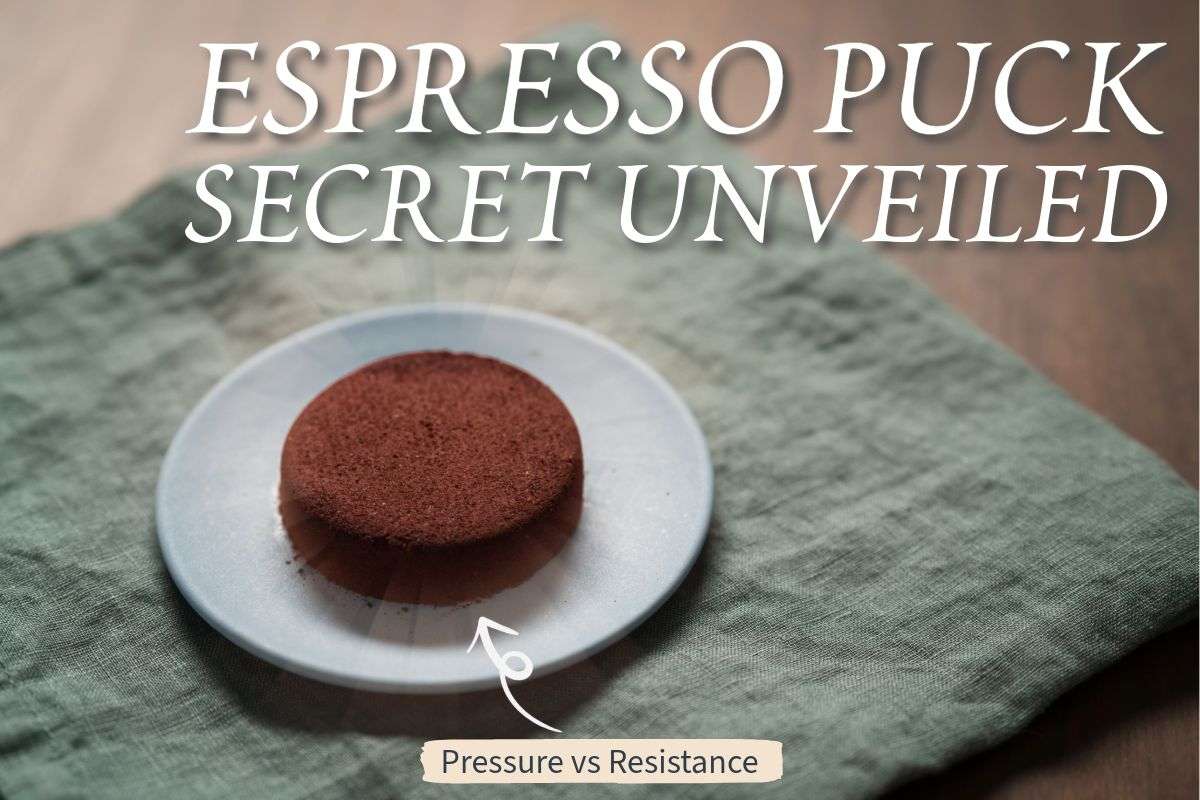
In this article, we will explore the intricacies of espresso making, starting with the essential art of puck preparation. This foundational skill sets the stage for everything that follows, impacting not only the flavor and quality of your espresso but also your satisfaction as a home barista. We’ll delve into how the grind, dose, and tamp directly influence the extraction process, creating the ideal conditions for a perfect espresso.
As we navigate through the dynamics of pressure, temperature, and extraction time, you’ll gain a deeper understanding of how these factors intertwine to extract the delicate oils, aromatic compounds, and rich flavors that define a stellar espresso. Additionally, we’ll introduce some indispensable tools and accessories that can enhance your brewing technique, offering you greater control and consistency.
1. The Art of Puck Preparation
Perfecting your espresso begins with the preparation of the coffee puck, a step that crucially influences the dynamics of extraction. Puck preparation is not just about the right grind, dose, and tamp; it’s about creating the optimal resistance against the espresso machine’s pressure to control the flow rate and achieve a balanced extraction. Here’s how to master this critical process:
Grinding: Setting the Stage for Resistance
The grind of your coffee is fundamental in determining the resistance of the puck. A finer grind increases the surface area, which in turn enhances the puck’s resistance against the water pressure. This resistance is crucial as it slows down the water flow, allowing ample time for the water to extract the coffee’s flavors optimally. However, if the grind is too fine, it might resist too much, leading to over-extraction and a bitter taste. Conversely, a coarse grind might offer too little resistance, causing under-extraction and a sour, weak espresso.
Achieving a consistent grind size is imperative to ensure even water distribution and extraction. Utilize a high-quality burr grinder for the most consistent results, as it allows for precise adjustments and a uniform grind, essential for balancing the puck’s resistance.
Dosing: Calibration of Coffee Quantity
Dosing correctly is vital in puck preparation because the amount of coffee used directly impacts the puck’s density and hence its resistance. Typical doses range from 16 to 18 grams, but this can vary based on the espresso machine and basket design. A well-measured dose fills the basket adequately, ensuring that when tamped, it presents the ideal resistance to the espresso machine’s water pressure.
Use a weighing scale to weigh your grounds accurately before tamping to maintain consistency in your espresso shots. Experiment with slight adjustments in dose to find the optimal resistance that works best with your specific machine and coffee type.
Tamping: The Final Adjustment in Puck Resistance
Tamping compresses the coffee grounds into a dense puck and is the final step in adjusting its resistance. The objective here is not just to tamp with consistent pressure (generally around 13kg of force), but to ensure the puck is even and level. An uneven tamp can lead to channeling where water bypasses some of the coffee, reducing resistance and causing uneven extraction.
Consistent tamping ensures that the puck has uniform resistance, promoting an even flow rate and thereby enhancing the extraction process. The Normcore spring loaded tamper offer pressure control to help achieve a perfect tamp every time.
2. Understanding Espresso Extraction
Espresso extraction is a fascinating process where precision and control converge to pull the rich and complex flavors from coffee beans. The success of this process largely depends on how well we understand and manage the elements of puck resistance, pressure, temperature, and time. Let’s delve deeper into these crucial components that shape the character of your espresso:
The Science Behind Extraction
At the heart of espresso making is the interaction between the coffee puck and the brewing water. When hot water is forced through the compacted coffee grounds at high pressure, it begins to dissolve and extract the compounds within the coffee. The resistance of the puck—created by proper grind size, dosing, and tamping—plays a critical role here. It determines the water’s flow rate, ensuring that the extraction is neither too rapid nor too slow, which is essential for capturing the full flavor potential of the coffee.
During this phase, hundreds of different chemical compounds are released, including oils, acids, and sugars, all of which contribute to the body, aroma, and flavor profile of the espresso. The balance between these compounds can significantly affect the taste, making the understanding of extraction science vital for any barista.
Pressure and Temperature
Pressure is the driving force behind espresso extraction, with most espresso machines designed to operate at about 9 bars. This force is essential for penetrating the tightly packed coffee grounds and facilitating the extraction of rich, aromatic oils and flavors. However, a common misconception among home baristas is that a low pressure reading on their machine’s gauge indicates a malfunction. In reality, this often points to an issue with how the coffee puck has been prepared.
If the puck has too little resistance—possibly due to a coarse grind, insufficient dosing, or inadequate tamping—the water will pass through too quickly, under-extracting the coffee. This results in a watery, weak espresso with minimal crema, and the pressure gauge may show lower than expected readings because the water isn’t meeting the expected resistance. It’s crucial for users to understand that achieving the right puck resistance is key to maintaining optimal pressure inside the machine.
Temperature, on the other hand, must be carefully controlled, typically around 90-96 degrees Celsius. Consistent temperature ensures that the water can effectively dissolve the desirable compounds without burning the coffee. Temperature stability is paramount; fluctuations can lead to inconsistent extractions, affecting both the flavor and quality of the espresso.
Pull a Blank Shot: Running a shot of water through your machine without any coffee (a “blank shot”) can help stabilize the temperature. It heats up the entire brewing path and the group head just before you brew your actual espresso. This is especially useful if your machine has been idle for a while. For home espresso machines that don’t retain heat as well, consider pulling a blank shot with the portafilter locked in right before your actual espresso shot to ensure it’s thoroughly heated.
3. Diving Deeper Into Espresso Extraction
In the pursuit of the perfect espresso, understanding the microenvironment within the coffee puck during extraction is crucial. This section will delve into the complex interactions at play within the puck itself, exploring how the coffee’s structure, particle distribution, and solubility impact the extraction process.
Coffee Puck Composition and Structure
The coffee puck, formed from tamped coffee grounds, is a densely packed matrix through which hot water must navigate. The structure of this puck—its density, particle size distribution, and uniformity—is pivotal in dictating the flow path of water. A uniform grind ensures even water distribution, while inconsistencies can create channels where water flows too quickly, resulting in uneven extraction.
Water Paths and Extraction Efficiency
As hot water is forced through the coffee puck under pressure, it seeks the path of least resistance. Ideally, water would flow evenly through all parts of the puck, but variances in tamp pressure and grind consistency can alter this ideal scenario. These paths, or channels, significantly affect the efficiency of extraction by either over-extracting certain areas (leading to bitterness) or under-extracting others (resulting in sourness). Advanced imaging techniques, such as MRI scans used in research, have shown how these channels form and how dramatically they can vary from shot to shot.
Impact of Pressure and Temperature at the Micro Level
Inside the puck, the interplay of pressure and temperature is critical. Pressure helps to extract soluble compounds effectively, but if it is too high relative to the resistance of the puck, it can compact the coffee further and restrict flow, potentially leading to under-extraction. Conversely, optimal temperature aids in efficiently dissolving desirable flavors and oils. The temperature not only needs to be high enough to facilitate this dissolution but also stable enough to ensure that all regions of the puck are extracted uniformly.
Solubility and Extraction Kinetics
Different compounds in coffee dissolve at different rates, influenced by the grind size and contact time with water. Larger particles dissolve slower than smaller ones, which is why a consistent grind is crucial for balanced extraction. The first compounds to dissolve are acids and fruity flavors, followed by the body-forming and bitter-tasting molecules. Managing the extraction time is critical to capturing the desired flavor profile without veering into over-extraction.
4. Essential Espresso Accessories to Enhance Extraction
To elevate your home espresso experience, certain accessories can be instrumental in fine-tuning puck preparation and enhancing the overall extraction process. Each tool plays a specific role in modifying puck resistance, thereby impacting the extraction dynamics. Here’s how these accessories can help:
WDT Tool (Weiss Distribution Technique)
The WDT tool is pivotal in creating an even distribution of coffee grounds within the portafilter. By breaking up clumps and spreading the grounds evenly, it reduces density variations within the puck, which in turn minimizes the risk of channeling. This more uniform distribution helps maintain consistent resistance across the puck, allowing for even water flow and extraction, resulting in a balanced flavor profile in your espresso.
Spring-Loaded Tamper
A spring-loaded tamper ensures that each tamp applies the same amount of pressure, leading to consistent puck density. This uniformity is crucial for maintaining predictable resistance against the brewing water. When the puck offers consistent resistance, it allows for more controlled extraction, reducing variability between shots and ensuring that each espresso is optimally extracted.
Puck Screen
Placing a puck screen atop the coffee puck before extraction can have multiple benefits. It not only helps distribute the water more evenly across the surface, preventing the initial burst of water from disrupting the puck structure, but also aids in maintaining the integrity of the puck throughout extraction. This leads to a more stable resistance and decreased likelihood of channeling, promoting a smoother and more consistent extraction process.
Competition Basket
Competition baskets are designed with precision to allow for optimal water flow through more uniformly sized and spaced holes. This precise engineering assists in creating a stable and consistent resistance within the puck, enhancing the extraction’s evenness. By allowing for a finer grind without the risk of excessive channeling, these baskets enable a tighter control over extraction variables, thereby improving the extraction quality and potentially enhancing the espresso’s flavor and strength.
As home baristas, our goal is not only to replicate the espresso quality of a professional café but to understand and revel in the process of its creation. The satisfaction derived from pulling the perfect shot of espresso comes from both the delicious result and the knowledge that our skills, understanding, and tools have come together harmoniously.
Whether you are a seasoned espresso enthusiast or a newcomer to this aromatic world, remember that the journey to espresso excellence is continuous. Each shot provides a learning opportunity, each sip a moment to savor. Embrace the complexity, experiment with confidence, and enjoy each step towards mastering the art of home espresso brewing.

